
“Time to Reengage”
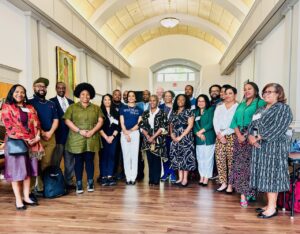
It has been a year since I last contributed to this blog, and many of the external challenges that prompted my pause remain. This season still feels like a time when crucial support systems are being weakened — federal funding slashed, DEI programs shuttered, long-standing research agendas upended, and entire careers ended. A lot of this change has disproportionately affected African American female professionals. The political climate continues to press hard, attempting to wear us down into submission. Yet, last week at the HBCU STEM Undergraduate Success Research Conference — an intellectual family reunion — I experienced a moment of clarity.
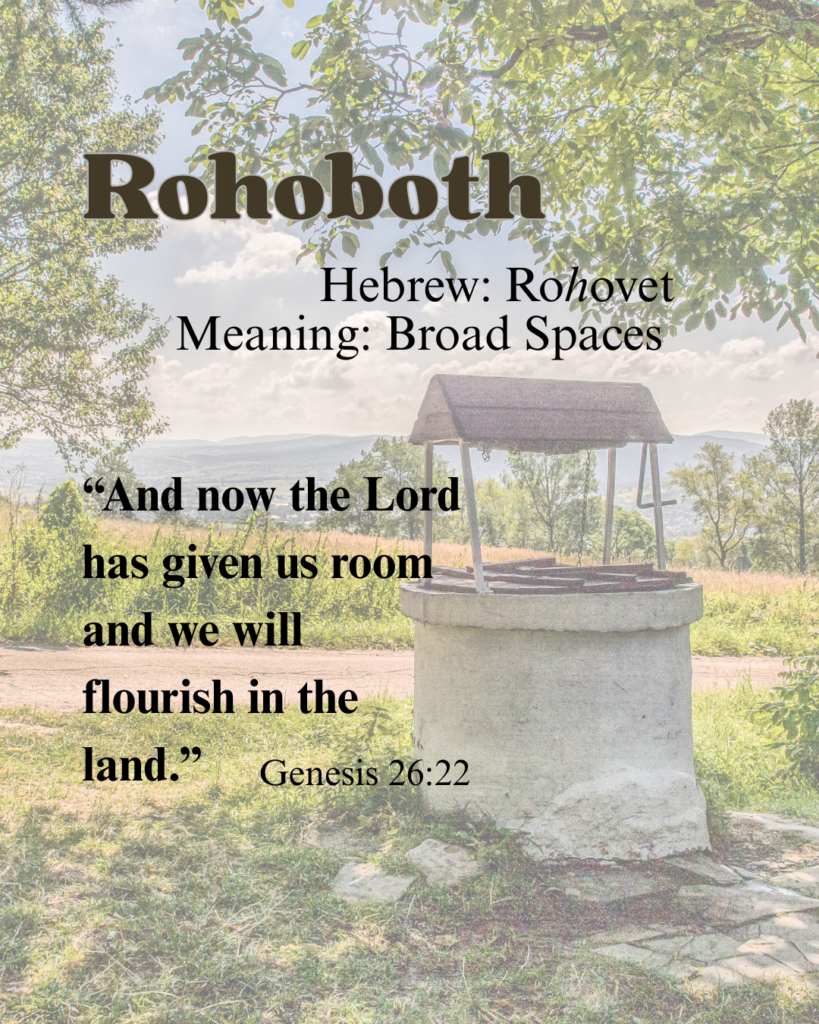
Since retiring last year, I have focused on my inner life but I started the journey with a call out to my pre-retirement community on WhatsApp. We called the virtual gatherings “Intentional Lifestyle Changes,” open to all who wanted to prioritize health and healing. It has now evolved into a holistic ministry — Rehoboth Faith — where I, along with co-founder Dannetter Brown, produce a monthly webinar, “Health by Habit.”
The internalization of what I’d been learning showed up on the last day of the conference last week when I didn’t show up on the final day. The previous day had done me in. After weeks of preparing for the book launch and readying my own final presentation, the stress caught up to me. My body said “rest,” and so I obeyed.
The old me would have kept going.
That one act of listening to my body and ignoring all the “shoulds” coming from my whirling mind marked a whole new way of relating to both body and mind. When my mind is quiet during the space between sleep and the start of the day, I am unreachable by edicts of any kind. No executive order can touch what I know in my body. My truth comes from a different type of listening.
This permission to listen deeply and reclaim my wholeness was reinforced at an earlier gathering at Spelman — The Psychology of Black Womanhood Conference — where I encountered Dr. Wendi Williams’ Black Women’s Liberatory Leadership (BWLL).
If you have not yet encountered BWLL, let me offer you the most important thing she says about leadership: “We do not need to learn it, we need to be it. We need only remember. It is in you.”
That sentence stopped me the first time I read it on her Substack because it is not saying that Black women need to be trained into leadership. It is saying the opposite. The leadership — the wisdom, the strategy, the grace, the fortitude — is already there. Has always been there. The work is not acquisition. The work is remembrance.
Dr. Williams grounds her praxis in two themes: refusal and recovery. Refusal means saying no to dehumanization, to extraction, to systems designed to use us up without seeing us whole. Recovery means claiming yourself back — your time, your energy, your vision, your joy — and doing it not as a temporary rest before the next battle but as an ongoing practice of wholeness.”
BWLL(S)
This framework has been transformative. It gave language to what many of us in the HBCU STEM world have been living, and what the Analytic Hub has been building for years without knowing what to call it.
- Our CareFull Scholars model — which centers collective wellbeing, authentic relationships, and rest as legitimate parts of scholarly production — is BWLL in practice for the writing life.
- Our FREE STEM intervention, which builds sister-scholar circles and self-authorizing communities for Black women faculty — that is BWLL at the institutional level.
- Our work with Project Knowledge, which found that students who felt safe and trusted were more willing to adopt new ways of thinking about themselves — that is BWLL showing up in the data.
And yet….
Here is what I have observed across many years of this work, and after habitual overworking and over commitment.
Refusal without an interior life becomes exhaustion wearing the costume of resistance. Recovery without a practice becomes rest that never quite reaches the places that need it most. And leadership — even liberatory leadership — can become another performance if we are not accessing our authentic self when no one is watching.
The systems we are up against are not only external. The internalized messages — that we are not enough, that rest is laziness, that our worth is measured by our output, that our ideas are only legitimate when validated by institutions that were not built for us — those messages live inside us. They have zip codes in our muscles and nervous systems and addresses down to our cells. They shape how we move through rooms, how we respond to criticism, how we decide what we deserve.
Refusal and recovery are essential. But to do them sustainably, over a lifetime and not just a season, something else is required. Something that happens in the interior. A practice of knowing, quieting, listening, and returning to center that is not dependent on what any institution does or does not do.
That is what I am calling the “S.” The S- for Spirit, for Soul, for our Source The S is not an addition to BWLL but a highlight to what Dr. Williams so elegantly identifies.
An Invitation
Over the coming weeks, this blog will explore what BWLL(S) looks like in practice — not as an abstract philosophy but as a set of daily, relational, and intellectual habits that will demonstrate what liberatory leadership means in real life.
We will look at how contemplative practice connects to scholarly productivity. We will examine what metacognition has to do with leading across generations. We will sit with the question of rest as a spiritual and scientific discipline, not a reward for the productive. We will examine, what Dr. Naomi Halls Byers calls “the social determinants of self-care” How your position on the social strata defines what self-care feels like and the relationship between self-care and health. We will inquire about what we are being liberated from.
And we will do all of it in community, which is the tradition of every practice worth keeping.

For now, I want to leave you with the question that started this work for me —
What would your leadership look like if your inner life were as carefully tended as your output?
You already know the answer. You just need to remember.