
After more than 35 years in higher education I am pondering a question; “Why are academic interventions still necessary for a large percentage of Black students who are drawn to STEM?” It is not that our students are not interested in STEM careers. It is not about deficits in their ability or motivation. So what is it?

Some scholars have pointed out persistent structural conditions that shape educational experiences and outcomes. For instance, this site provides an entire back story on issues confronting Blacks in higher education. State of the People: Black Papers and I agree. There are, as is pointed out, longstanding inequities embedded within educational systems and institutions. However, recent events, including the dismantling of key provisions of the Voting Rights Act make it clear that our current leaders have different priorities. A solution that addresses educational inequities or the related issue of health disparity or housing affordability is not a high priority. In fact, it feels like the current goal is to not just roll back gains made in the last 60 years but to remove the structures that have enabled those gains to take place.
Fortunately, when it comes to student success, we already know what works.
What Everyone Wants to Know
Everyone wants to know what’s in the “sauce” at HBCUs. Beyond curiosity, institutions nationwide are asking critical questions: How do we diversify STEM faculty? How do we build pipelines for future STEM leaders? Our upcoming book helps provide evidence-based answers to these pressing questions.
Scalable STEM Interventions at
Historically Black Colleges and Universities
Theory & Praxis for Lasting Change
Learn more about it on the Hub’s website here
In our upcoming book, we focus on effective academic interventions and how they can be replicated across institutions, scaled to larger populations of students and sustained over time.
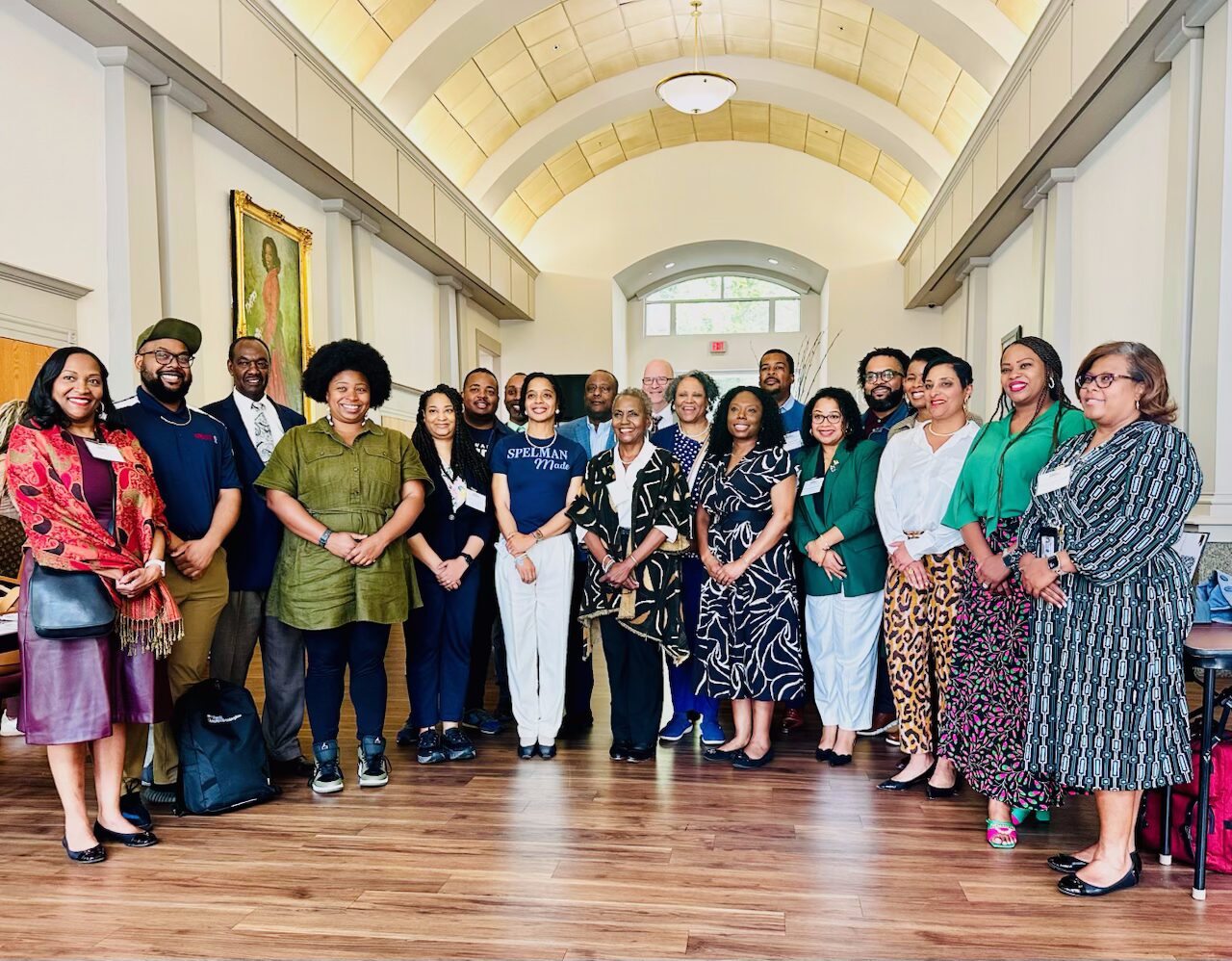
The book is one of the outcomes of the HBCU STEM Undergraduate Success Research Center and the authors represent a range of scholarly experiences in academic research and expertise across STEM fields. Critically, our author team brings unique institutional knowledge and cultural insight—many are STEM-trained scholars of color with current or former HBCU affiliations, ensuring an authentic examination of these contexts rather than external analysis. This distinction matters: unlike existing research that makes flawed comparisons between Black students at HBCUs and PWIs, this work conducts deep, in-depth analysis of HBCUs themselves—recognizing these institutions and their communities are not monolithic but complex, diverse, and uniquely positioned to advance STEM education.

The highlighted interventions have been conducted at different types of institutions with some reaching into the larger communities. While the investigators used different approaches, the interventions share some critical components that recognize students’ strengths, validate their experiences, and create pathways for deeper learning.
A Framework for Understanding What Works
Our framework intentionally weaves together multiple conceptual perspectives—rather than relying on a single theoretical lens—to capture the complexity of what actually works for Black STEM students. Drawing on foundational models like Brunswick and Spencer’s frameworks while contemporizing theories like PVEST, we bring new relevance to how we understand student development in today’s environment.
The book confirms that successful students are not a product of any single thing but a combination of intentional, evidence-based strategies that support student success at multiple levels. We recognize that interventions are not temporary fixes but synergistically enhance positive aspects of a student’s lived experience, thus impacting what one theorist calls the student’s entire learning ecosystem.
The question now becomes how to replicate, scale, and sustain the interventions that work.